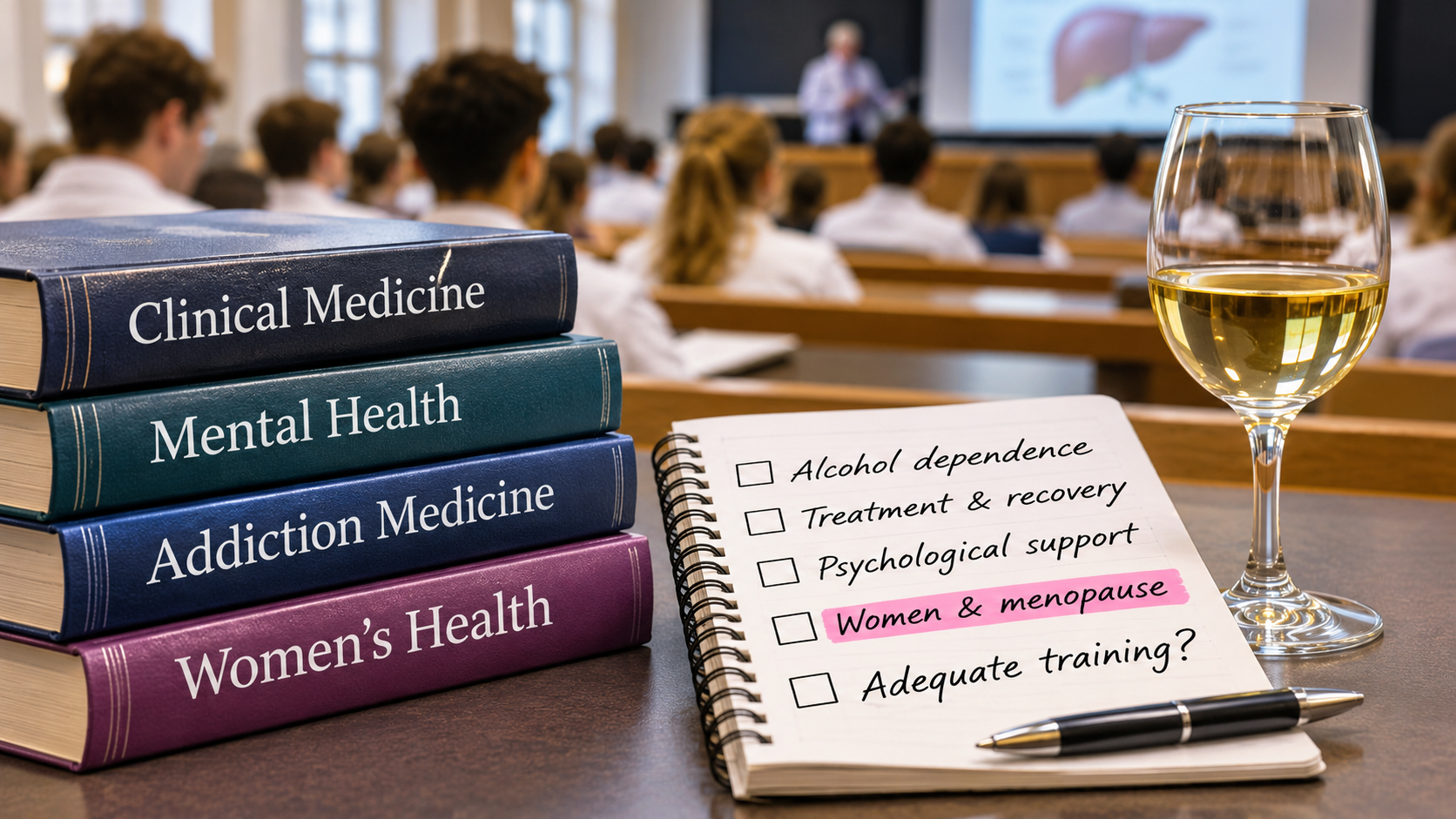
An investigation by Harrogate Sanctuary raises questions about how alcohol dependence is taught in some of Britain's medical schools.
When someone struggling with alcohol dependence finally seeks help, their GP seems always to be, the first step.
That conversation can be enormously important. Recognising dependence, understanding the psychological reasons behind drinking, and knowing how to support lasting recovery can make a real difference.
But how much are our future doctors actually taught about these things?
I recently submitted Freedom of Information requests to UK medical schools, asking how much compulsory undergraduate teaching they provide on alcohol misuse, dependence, withdrawal, psychological treatment and recovery.
I also asked a question that is particularly important to me: what are medical students taught about alcohol use in women, especially during perimenopause and menopause?
What did the universities tell me?
In the nine responses I have examined, the picture is surprisingly difficult to pin down.
Some universities identified only a few hours of specific teaching. Others described a much wider range of lectures, clinical placements and practical learning, but could not provide an exact total.
The figures cannot fairly be compared as though every university measures its teaching in the same way.
Nevertheless, a question remains: if universities cannot consistently identify how much time is devoted to alcohol dependence and its treatment, how can we properly evaluate whether that education is sufficient?
What about women and alcohol?
Several universities reported no dedicated teaching specifically addressing alcohol use in relation to menopause or hormonal changes.
Teaching about alcohol in pregnancy was more readily identified.
Yet women's relationship with alcohol does not begin and end with pregnancy. Midlife can bring significant physical, emotional and hormonal changes, and women deserve healthcare professionals who understand their circumstances.
Beyond the physical consequences
Alcohol-related liver disease, intoxication and withdrawal are important medical subjects. Of course they must be taught.
But alcohol dependence is not simply a physical condition.
Understanding behaviour, emotional distress, habitual drinking, psychological treatment and the challenges of recovery is equally important to helping people change their lives.
As a Cognitive Behavioural Therapist specialising in alcohol dependence, I see how valuable that understanding can be.
A question worth asking
This investigation does not establish that medical graduates are inadequately trained, nor does it assess the quality of individual universities or doctors.
It does, however, raise legitimate questions about the consistency and transparency of undergraduate alcohol education.
Alcohol dependence deserves more than recognition of its physical consequences. It deserves a thorough understanding of the person behind the drinking.
And surely that is something worth teaching our future doctors.
Sarah
